


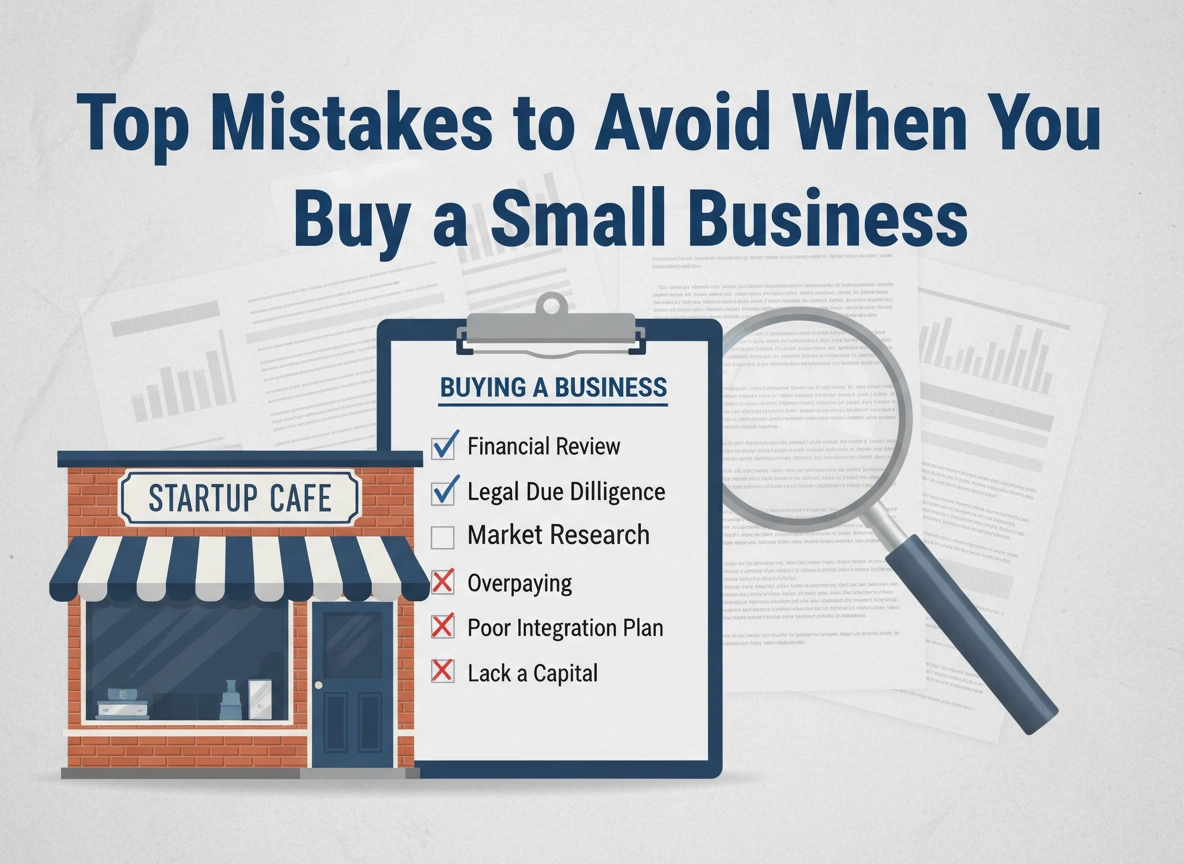
Buying an existing business is one of the fastest ways to become an entrepreneur. You skip the grueling startup phase, walk into an operation with existing cash flow, and inherit a customer base. But for every success story, there is a cautionary tale of a buyer who overlooked critical details and ended up with a financial disaster.
The excitement of ownership often clouds judgment. Buyers fall in love with the idea of a business—a cozy café, a bustling manufacturing plant, or a sleek software company—rather than scrutinizing the reality of its operations. The difference between a profitable acquisition and a money pit usually comes down to due diligence and emotional discipline.
This guide explores the most common and costly mistakes prospective buyers make. By understanding these pitfalls, you can navigate the complex acquisition process with confidence and secure a deal that truly serves your financial goals.
1. Skipping Comprehensive Due Diligence
Due diligence is the investigative phase where you verify everything the seller has told you. Many buyers treat this as a quick formality, trusting the seller’s profit and loss statements without digging deeper. This is the single biggest error you can make.
The Financial Reality Check
Sellers naturally want to present their business in the best light. They might “normalize” earnings by adding back personal expenses that aren’t strictly business-related. While some add-backs are legitimate, others are not. You need to review at least three years of tax returns, bank statements, and accounts receivable. If the tax returns show significantly lower income than the P&L statements presented to you, believe the tax returns.
Beyond the Numbers
Due diligence isn’t just financial. You must investigate legal and operational risks. Are there pending lawsuits? Are the employee contracts transferable? Is the intellectual property (like the brand name or software code) actually owned by the company? Failing to check these details can leave you with a business you can’t legally operate the way you intended.
Actionable Tip: Hire a forensic accountant or a CPA experienced in M&A (Mergers and Acquisitions) to review the books. Their fees are a fraction of what you could lose on a bad deal.
2. Ignoring the “Key Person” Risk
Small businesses often revolve around the owner. They hold the relationships with key suppliers, they know the quirks of the machinery, and customers come back specifically to see them. This is known as “Key Person” risk or “Owner Dependence.”
If you buy a business that is heavily dependent on the current owner’s personal brand or unique skills, you aren’t buying a business; you are buying a job that you might not be qualified to do. When the owner leaves, the revenue might leave with them.
Evaluating Transferability
Look at the customer concentration. Does one client make up 40% of the revenue? If that client is best friends with the seller, they might walk away once the sale closes. Similarly, assess the staff. If the business runs smoothly only because a specific manager is there, you need to ensure that manager is incentivized to stay post-acquisition.
Actionable Tip: ask the seller to take a two-week vacation during the due diligence period. If the business chaos increases or revenue drops while they are gone, the business is too owner-dependent.
3. Underestimating Working Capital Needs
Buying the business is just the entry fee. You also need money to keep it running. A common mistake is using all available cash for the down payment and closing costs, leaving the operating account empty on day one.
Working capital is the cash required to cover day-to-day operations—payroll, inventory, rent, and utilities—before your customers pay you. In many businesses, there is a lag between when you spend money and when you receive it. If you buy a business with seasonal fluctuations, this cash crunch can be fatal in your first few months.
The Cash Flow Trap
Don’t assume the cash currently in the bank comes with the business. Usually, the seller keeps the cash in the accounts at the time of closing. You need to inject your own working capital immediately. If you haven’t budgeted for this, you might have to take out expensive short-term loans or max out credit cards just to make the first payroll.
Actionable Tip: calculate the average monthly operating expenses and ensure you have access to at least three to six months of working capital separate from the purchase price.
4. Failing to Understand the Industry
It is tempting to buy a business because it looks profitable, even if you have no experience in that sector. While you don’t need to be an expert technician to own an HVAC company, you do need to understand the industry dynamics.
The “Outsider” Disadvantage
If you don’t understand the competitive landscape, you won’t spot looming threats. For example, buying a traditional taxi fleet right before rideshare apps took over, or purchasing a print marketing agency as digital ad spend skyrocketed. Industry veterans see these shifts coming; outsiders often do not.
Furthermore, employees can smell inexperience. If you step in as the new owner and make changes that reveal a lack of industry knowledge, you will lose the respect of your team instantly. This leads to turnover, which destabilizes the transition.
Actionable Tip: immerse yourself in the industry before making an offer. Read trade journals, attend conferences, and speak to other business owners in the sector.
5. Overlooking Culture Fit and Transition Issues
Numbers fit on a spreadsheet, but people fit in a culture. A business is a living ecosystem of employees, vendors, and customers. A jarring transition can destroy that ecosystem.
Many buyers, eager to make their mark, plan drastic changes in the first 90 days. They want to implement new software, change the branding, or restructure the org chart. While well-intentioned, this often backfires. Employees, already anxious about the ownership change, view these moves as hostile.
The “New Sheriff in Town” Syndrome
Aggressive changes signal to employees that what they were doing before was “wrong.” This kills morale. The most successful transitions usually involve the buyer listening more than talking for the first few months. You need to understand why things are done a certain way before you try to fix them.
Actionable Tip: negotiate a transition period where the seller stays on as a consultant for 3-6 months. This helps smooth the handover of relationships and knowledge, reassuring staff and customers alike.
6. Not Negotiating the Lease Properly
For brick-and-mortar businesses like retail stores, restaurants, or manufacturing shops, the lease is one of the most valuable assets—and biggest liabilities.
Imagine buying a popular restaurant only to find out the landlord refuses to transfer the lease, or that the lease expires in six months and the rent is doubling. You could effectively lose your entire investment if you lose the location.
The Landlord Variable
Never assume the lease is automatically transferable. You must review the lease agreement carefully. Look for “assignment” clauses that dictate how a transfer works. Some landlords use the sale of a business as leverage to renegotiate terms or demand a personal guarantee from you.
Actionable Tip: make the business purchase contingent on securing a satisfactory lease. Do not close the deal until the landlord has signed off on the transfer or a new lease with terms you can accept.
7. Letting Emotions Dictate the Price
Deal fever is real. After spending months searching for a business and weeks in negotiations, you become emotionally attached to the outcome. You start visualizing yourself as the owner. When the seller pushes back on price or due diligence reveals a minor issue, you might be tempted to overpay or ignore the problem just to “get it done.”
The Valuation Trap
A business is worth a multiple of its discretionary earnings (SDE) or EBITDA, not what the seller “needs” for retirement. If the financials don’t support the asking price, you must be willing to walk away. Overpaying puts immediate pressure on the cash flow, leaving you no room for error or growth investment.
Actionable Tip: set a strict ceiling for your offer based on objective valuation methods, not emotion. If the deal exceeds that ceiling, walk away. There will always be another business.
Conclusion
Buy a small business is a high-stakes endeavor that requires a balance of optimism and skepticism. The perfect business does not exist; every company has warts, hidden issues, and risks. The goal is not to find a flawless business, but to identify the flaws so you can price them into the deal and manage them effectively.
By avoiding these common mistakes—skipping deep due diligence, ignoring owner dependence, undercapitalization, and emotional pricing—you significantly increase your odds of success. Assemble a team of advisors, trust the data over the sales pitch, and remember that the best deal is sometimes the one you walk away from. When you do find the right opportunity, you will be prepared to take the reins and drive the business toward its next chapter of growth.
