


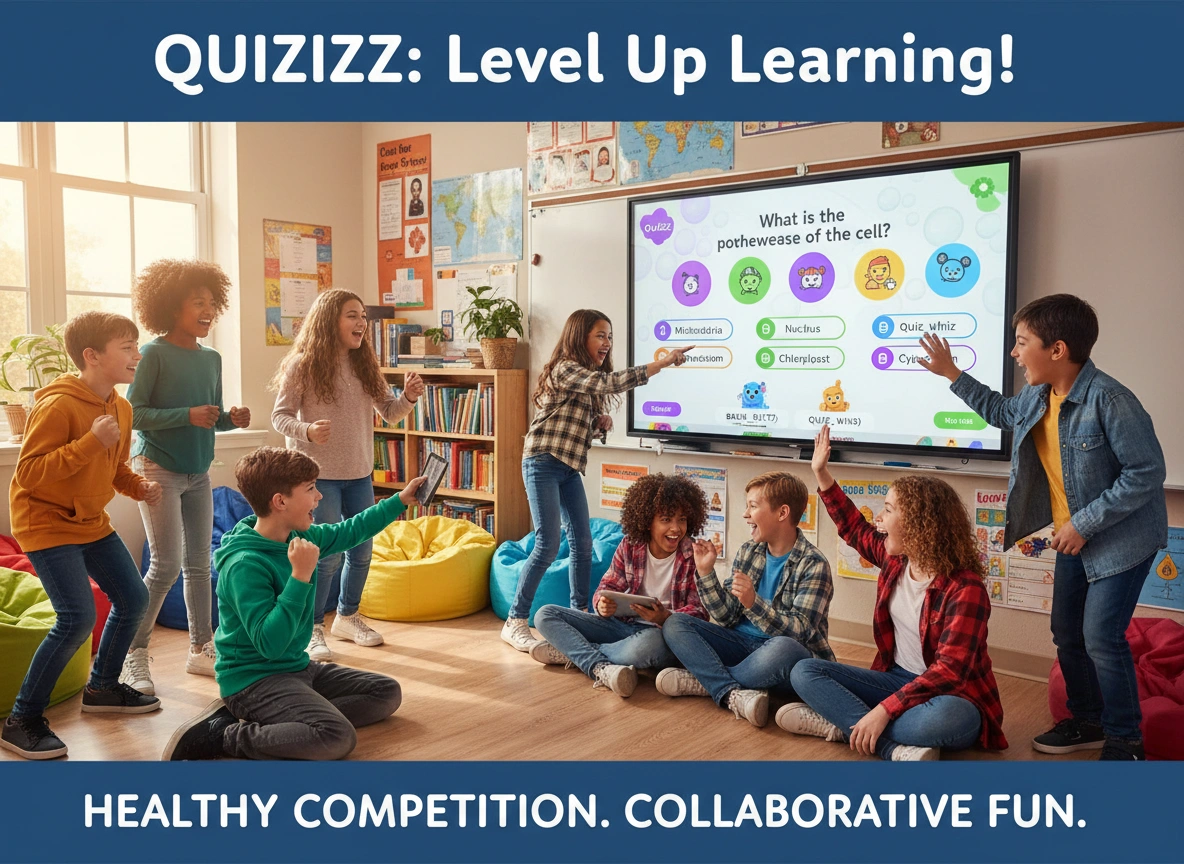
Competition in education is a double-edged sword. When handled poorly, it can create anxiety and discouragement among struggling students. But when channeled effectively, it becomes a powerful motivator that drives engagement, reinforces learning, and builds classroom community. This is where gamification platforms like Quizizz have revolutionized the educational landscape.
Quizizz has emerged as a favorite tool for educators worldwide not just because it makes testing easy, but because it reframes assessment as a shared, energizing experience. By balancing individual accountability with interactive game mechanics, Quizizz helps teachers foster a specific kind of competition—one that is healthy, inclusive, and ultimately focused on growth rather than just winning.
Redefining Competition: From Anxiety to Engagement
Traditional competition often pits students against one another in a zero-sum game where only the top performers feel validated. This “survival of the fittest” mentality can be damaging, leading to disengagement from students who feel they can’t compete. Healthy competition, however, focuses on improvement, effort, and the thrill of the challenge itself.
Quizizz supports this shift by prioritizing the learning process over the final grade. The platform’s design ensures that while scores matter, the immediate feedback loop and the engaging interface keep students focused on answering correctly, not just beating their neighbor.
The Psychology of Gamified Learning
Gamification taps into intrinsic motivation. The dopamine release associated with earning points, seeing a leaderboard climb, or unlocking a power-up transforms a mundane review session into an event.
- Immediate Gratification: Students know instantly if they are right or wrong, allowing for self-correction in real-time.
- Low-Stakes Environment: Unlike a formal exam, a Quizizz session feels like a game. The fear of failure diminishes because the consequences are low, encouraging students to take risks and participate more fully.
- Mastery Orientation: The ability to retake quizzes encourages students to improve their own previous scores, shifting the focus from “beating others” to “beating my personal best.”
Key Features That Foster Healthy Rivalry
Quizizz isn’t just a digital worksheet; it is engineered with specific features that promote positive competitive behavior.
1. The Dynamic Leaderboard
The leaderboard is perhaps the most recognizable feature of Quizizz, but its implementation is key. It updates in real-time, creating a sense of urgency and excitement. However, teachers have full control over this feature. They can toggle it on to ramp up energy or turn it off to focus purely on accuracy.
When active, the leaderboard creates a “race” atmosphere. Students see their avatars climb the ranks, which motivates them to stay focused. Crucially, the leaderboard often highlights the top 5 or top 10, meaning students lower in the rankings aren’t publicly shamed. They can simply focus on their own screen and their own progress.
2. Power-Ups and Redemption Questions
These two features are game-changers for maintaining morale.
- Power-Ups: Students can earn abilities like “Streak Saver” (which protects a streak even if they get a question wrong) or “Double Jeopardy” (which doubles points for a correct answer). These add a layer of strategy and fun that levels the playing field. A student who isn’t the fastest test-taker might still rank high by using power-ups wisely.
- Redemption Questions: This feature allows students to retry a question they got wrong earlier in the game. It reinforces the idea that mistakes are not final—they are opportunities to learn. This keeps students in the game mentally, preventing the “I already lost, so why try?” attitude.
3. Asynchronous Competition (Homework Mode)
Competition doesn’t always have to be live. Quizizz allows teachers to assign quizzes as homework with a deadline. Students can play at their own pace, yet they still compete against the class for a high score. This is excellent for students who may feel overwhelmed by the high-speed pressure of a live game. It allows for thoughtful reflection while still providing the motivation of a competitive ranking.
Implementing Quizizz for Collaborative Success
While individual competition is valuable, Quizizz is equally powerful when used to foster team spirit. Collaborative learning is a critical skill, and gamification provides a structured way to practice it.
Team Mode: We Win Together
In Team Mode, Quizizz sorts students into groups. Their individual scores contribute to a collective team total. This fundamentally changes the dynamic in the room. Suddenly, the high-achieving student has a vested interest in helping their struggling teammate understand the material.
- Peer Teaching: You will often see students whispering explanations to one another or cheering each other on.
- Shared Accountability: Success becomes a group effort. The pressure is distributed, making it less daunting for individual students.
- Social Emotional Learning: Students learn to communicate, strategize, and support one another, turning the classroom into a community of learners.
The “Class Goal” Strategy
Instead of student-vs-student, try class-vs-content. Teachers can set a target accuracy rate (e.g., “Let’s see if the whole class can get above 80% accuracy on this topic”). Using the comprehensive reports Quizizz generates, the teacher can project the class average. If the class hits the goal, they earn a collective reward. This unites the entire room against the “game,” fostering a massive sense of camaraderie.
Real-World Examples: Success in the Classroom
How does this look in practice? Here are scenarios where educators use Quizizz to drive healthy competition effectively.
Scenario A: The Exam Review Tournament
Before a major unit test, a history teacher runs a Quizizz session. Instead of a silent study hall, the room is buzzing. The teacher uses the “Shuffle Questions” feature so students can’t just copy answers from a neighbor. The competition is fierce but friendly. After the game, the teacher uses the data to identify the three questions most students missed and reviews those concepts immediately. The competition highlighted the gaps in knowledge without embarrassing anyone.
Scenario B: The Weekly Mastery Challenge
A math teacher sets up a recurring “Friday Challenge.” Students know that every Friday, they will compete in a fast-paced mental math Quizizz. The student with the highest improvement score—not just the highest total score—gets to choose the background music for independent work time the following week. This rewards growth and effort, keeping students of all ability levels engaged in the competition.
Scenario C: Student-Created Content
To deepen understanding, a science teacher has students create their own Quizizz questions as a review assignment. The teacher then compiles the best student-generated questions into a “Class Master Quiz.” When they play the game, students feel a sense of ownership. They are competing on a field they helped build, which increases buy-in and excitement.
Best Practices for Maintaining a Healthy Environment
While the tool is powerful, the teacher’s facilitation is what ensures the competition remains healthy.
- Celebrate Accuracy, Not Just Speed: Remind students that rushing leads to mistakes. While speed yields more points, accuracy is the primary goal. You can adjust settings to reduce the point bonus for speed if it’s causing too much chaos.
- Use Nicknames Wisely: Allow students to use creative nicknames or assign random names generated by Quizizz. This provides a layer of anonymity that can protect shy students from feeling exposed on the leaderboard.
- Vary the Format: Don’t use the exact same settings every time. Rotate between Classic Mode, Team Mode, and Test Mode. Variety prevents the novelty from wearing off and caters to different learning styles.
- Debrief the Data: Never just play the game and move on. Always take a moment to look at the class accuracy report. Say things like, “Wow, look at how well Question 7 was answered! We really mastered that concept.” This grounds the fun in actual academic progress.
Conclusion
Quizizz has proven that the classroom doesn’t have to be a quiet, solitary place to be productive. By leveraging the mechanics of gamification, it turns assessment into an activity that students actively look forward to. It encourages healthy competition by balancing the thrill of the leaderboard with features that support redemption, collaboration, and personal growth.
For educators, the goal is to build resilient learners who view challenges as opportunities. When used strategically, Quizizz does exactly that—transforming the classroom into an arena where every student, regardless of their academic standing, feels motivated to jump in and play the game of learning.
Actionable Next Steps
- Try Team Mode: If you usually run individual games, try Team Mode next week to observe how it changes student interaction.
- Analyze the Reports: After your next session, look specifically at the “Class Accuracy” metric and share it with your students to set a collective goal for next time.
- Enable Redemption Questions: Turn this setting on to help students develop a growth mindset regarding their mistakes.
